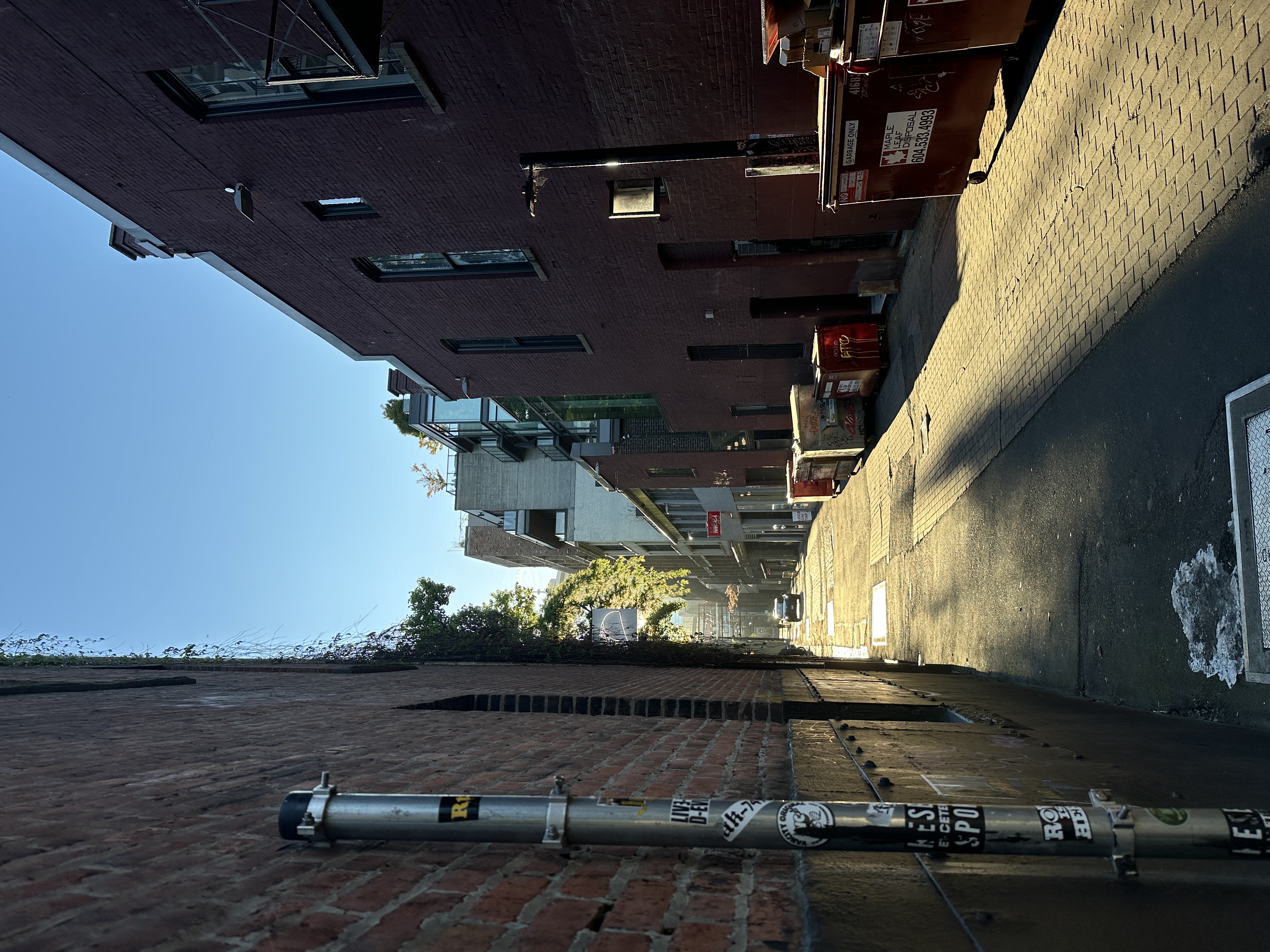
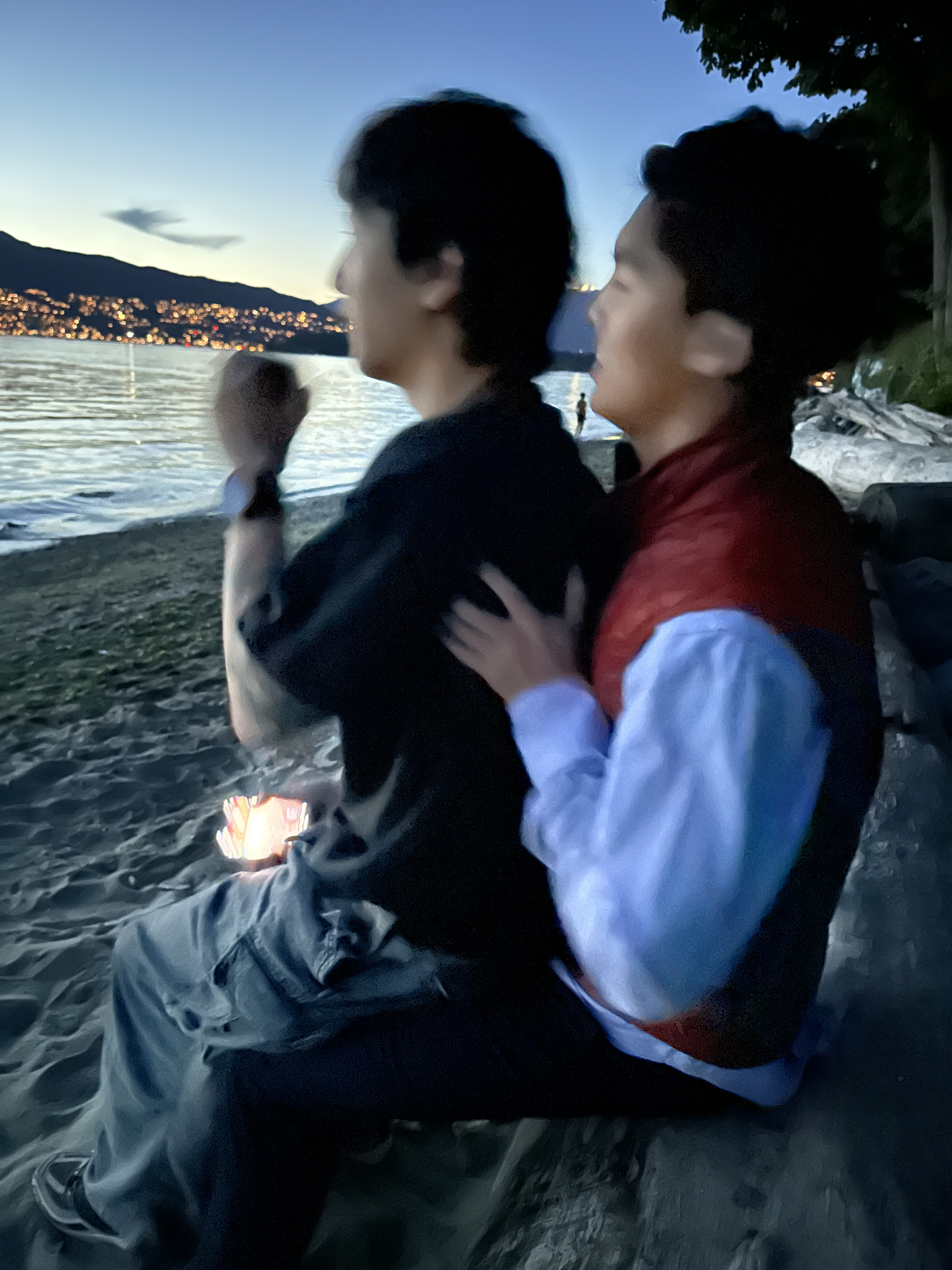
In Vancouver, everyday life is very laid-back, without a strong atmosphere of "going to the office." At the same time, outdoor activities here are incredibly abundant: hiking, skiing, cycling, water sports, and so on, more than one can count. It is hard to say for sure whether everyone here actually lives this relaxed lifestyle, or whether people really are all so passionate about outdoor sports, but at the very least, this is the subjective impression the city gives. It is also necessary to mention that the natural landscape here is simply outstanding. I have skied, ridden mountain bikes, and jumped into the water here. The natural scenery is so close to perfect that it is almost beyond criticism, and it is very much worth experiencing in person.
This is not a metropolis in the classic sense. The downtown area is neither too big nor too small; it is beautifully designed and built, without the oppressive feeling of architecture found in cities on the eastern side of North America. Even in the financial district, people on the streets do not appear to be in a hurry. To use a somewhat crude comparison: if someone who has long lived in East Asia or eastern North America, working a standard full-time city job, came here, it would be impossible for them not to feel relaxed. Judging from these aspects alone, this city is excellent, almost dreamlike. However, it is undeniable that there are problems here as well: extremely high living costs, soaring housing prices, a large wealth gap, and so on. The city has drawn in too many wealthy people, and assets have become highly financialized. The position of capital controls the city's economy, and in areas where development and innovation could be used to generate shifts in wealth between people, the city does not show much vitality. In short, Vancouver has exceptionally favorable fundamentals and a very stable social structure, and the local lifestyle has barely changed over a long period of time. Perhaps life here is so comfortable and fixed that even those who have the capacity to make changes choose to settle into the status quo once they arrive.
Vancouver's economic foundation: this is quite a wealthy city, but the individuals within it are not necessarily wealthy. Finance, insurance, and real estate account for about 31% of the Greater Vancouver economy, bringing a great deal of "hot money" into the city, while at the same time being constrained by the excessive financialization of real estate. At the same time, Vancouver is also a cluster for the tech industry. The tech sector here is deeply intertwined with the cultural sector, in areas such as gaming, animation, interaction, web3, and so forth. In addition, there are other industries that intersect heavily with culture, including branded consumer goods, tourism, and education. Overall, Vancouver is not the core center of any single industry, like the way New York is for finance and art, but rather functions as a regional hub.
As for Vancouver's cultural industries, one must especially highlight the film and media sector. As the third largest film and television production base in North America, after Los Angeles and New York, Vancouver provides high-end production services, talent, and locations. The section that is closest to .vax's own focus, the "visual elements, curation, and public art sectors," are themselves highly dependent on government funding and short-term project grants. If we only regard ourselves as "simply doing art," and do not explore potential points of convergence with other industries, then we will be facing a very fragile ecological foundation and questions about our own survival. This is not necessarily a bad thing. If we broaden our perspective and focus on supporting artists' creativity and the value this brings to society, rather than only the value of the artworks themselves, then .vax may be able to respond more precisely to social needs.
The above description, on the one hand, aims to help potential artists gain a fuller understanding of the basic overall picture of this city. On the other hand, it uses the city's cultural and economic foundation as a basis to sketch out a general direction for the first session of artistic creation under the .vax residency.
Today, visual creativity is present in almost every product people encounter, and is especially prominent in certain fields. One example is the visual presentation of album and single covers in music, where visual art and design are intertwined. In my view, the images on these covers often have a deeper impact on most people in contemporary life than any painting produced since the 1980s. The audience for art (taken as the sum of all its branches) is larger than at any previous time, in an era when the cost of information dissemination is close to zero. Pure art, if such a typical form really exists, has a weaker influence on the majority of people in society than other areas of the creative industries, but this does not mean that it is in decline or disappearing. Rather, its audience and market size have long remained relatively stable and its circulation somewhat closed off. It may even be that from the very beginning, the direct audience of pure art was always that small group of people.
For potential artists who come to our residency, my suggestion is: try to understand the environment, keep an open attitude and perspective toward your own work, and do not view your practice in absolute terms, even if your creative act feels absolute to you on a subjective level. For .vax, this implies two independent systems of value judgment. The first is a judgment purely about the artistic value of a given work. The second is a comprehensive evaluation of an artist's creativity and practice, and the potential they have to generate interactions with things outside the conventional art field.
A recent art phenomenon originating from Vancouver that has had broad international impact is "The Vancouver School," a loss term used to describe a group of artists from Vancouver and their photographic practices starting in the 1980s. Image-based work, photography, and media art have a wide foundation in Vancouver. Similar fields include printmaking, new media, and digital art. Because these art forms are inherently reproducible, they have stronger capacities for dissemination, even if they have not yet gained a "canonical" status in the commonly accepted histories of art. There are also a number of regionally renowned festivals and events related to image-based practices in Vancouver, such as Polygon and Capture.
To be honest, I cannot fix a specific theme for the first residency session right now to directly guide the artists' creative direction. However, the background I have outlined above, combined with the artists' own research, should be enough to spark some chemically reactive thought processes in our active minds and provide inspiration for potential works. Some of these ideas will unfold into actual pieces in Vancouver, and the concrete theme of the first session will be gradually refined through this very process.